
Plumbing Estimating Software: Faster Quotes That Still Protect Margin
The estimate is where a plumbing company makes or loses its week. Send it fast and present it well and close rates climb; let it sit until tomorrow and the customer has called two competitors — one of whom answered with a number while your tech was still driving home to type his. Estimating software exists to compress that gap to minutes without giving away margin. Here is how the major platforms handle quoting, from the generalists to the flat-rate specialists.
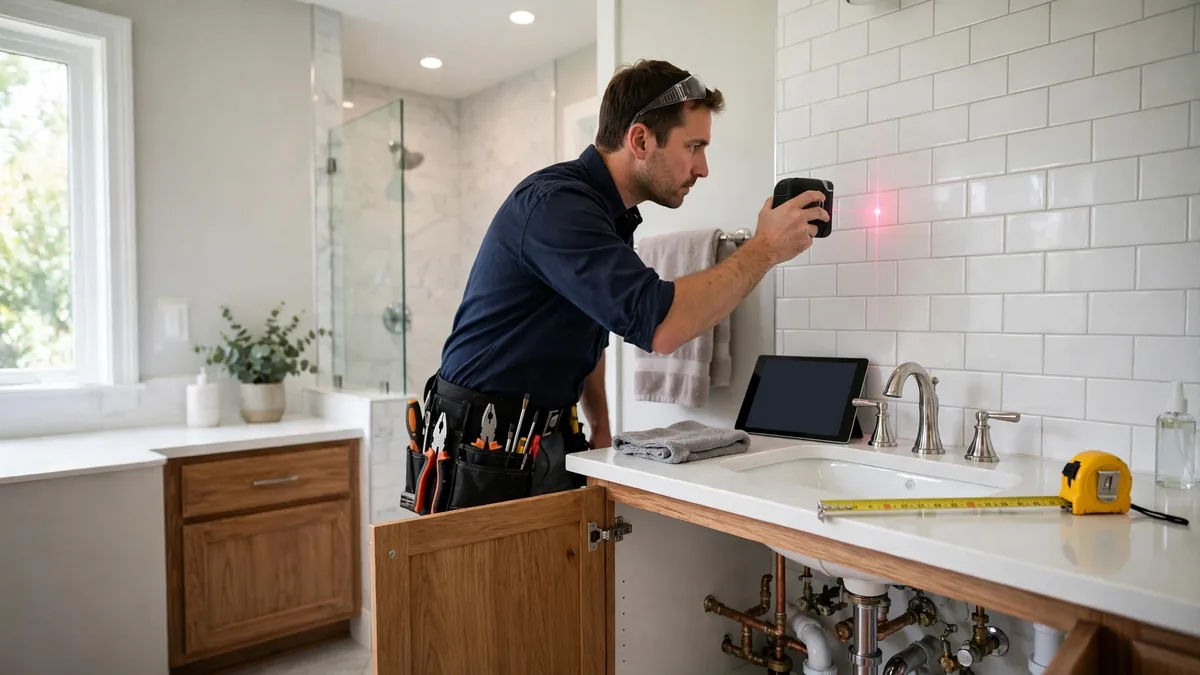
The estimate is where a plumbing company makes or loses its week. Send it fast and present it well and close rates climb; let it sit until tomorrow and the customer has called two competitors — one of whom answered with a number while your tech was still driving home to type his. Estimating software exists to compress that gap to minutes without giving away margin. Here is how the major platforms handle quoting, from the generalists to the flat-rate specialists.
What does good estimating look like in practice?
| Step | Good software behavior | Watch out for |
|---|---|---|
| Build the quote | Saved tasks/line items, packages, photos attached | Free-typing every price — margin leaks |
| Present options | Good-better-best on one screen, homeowner-friendly | A single take-it-or-leave-it total |
| Get approval | Text/email approval with a tap, deposit collected | “Print, sign, scan and send it back” |
| Convert | Approved quote becomes the job and later the invoice | Re-typing the same numbers twice |
| Learn | Won/lost tracked per tech and job type | No idea which quotes you lose or why |
Which platform estimates best for which shop?
Jobber is the generalist winner. Quoting is fast, optional line items and packages present cleanly, approvals arrive by text, and conversion to scheduled work is one click — Jobber pricing starts at $29/mo, so the barrier is a rounding error. Its weakness for flat-rate purists: the price book is your construction, not a dedicated engine.
Housecall Pro is the presentation winner. Its estimates are built for the kitchen table — options laid out for a homeowner, financing surfaced at the big-ticket moment. The price book arrives at the Essentials tier ($149/mo), and our Jobber vs Housecall Pro comparison argues the two philosophies directly.
Service Fusion and FieldEdge are the flat-rate winners. When the estimate must come from a governed task book — with margins set by the office, not improvised by the tech — these two are the serious tools, FieldEdge adding the QuickBooks Desktop sync its installed base runs on. Full treatment in flat-rate pricing software.
Workiz and ServiceTitan both estimate competently inside bigger stories — Workiz ties the quote to the recorded call that produced it; ServiceTitan adds approval analytics and option tracking at enterprise depth. Neither wins estimating alone, both win it as part of their whole.
How does estimating speed show up in money?
Owners consistently report the same pattern: the first company to a clear, approvable number wins a disproportionate share of residential replacement work — water heaters, repipes, softeners — because the customer is anxious and shopping under time pressure. Software cannot make your tech faster on the tools; it can make the office invisible. The practical target: a tech should be able to build and send a standard replacement quote from the driveway in under five minutes, and the customer should be able to approve and pay the deposit from the text message. Run that exact drill in every trial.
The second money effect is quieter: margin consistency. Estimates built from a book price the same job the same way across techs; estimates built from memory wander — usually downward, from your most generous tech. If your close rate is high and your margins are thin, your estimating process, not your pricing, is the leak. Our how to price plumbing jobs guide covers the numbers themselves; this software category is how you make the numbers stick.
What does estimating look like across a real week?
Monday’s quotes are replacements — water heaters, disposals, a softener — and the winner trait is speed from the book: the tech who presents a priced, scoped option set at the kitchen table, deposit collected by text, has beaten every competitor still “working up a number at the office.” This is the ground Housecall Pro’s presentation and Jobber’s packages fight over, and at small scale both win it daily.
Wednesday brings the diagnostic that becomes a scope: the camera finds the broken sewer, and the estimate becomes a small construction proposal — excavation, replacement, restoration, with exclusions and allowances. Here the flat-rate specialists’ task structure (Service Fusion, FieldEdge) and ServiceTitan’s depth earn their complexity: allowances, change-order paths and progress draws must be representable in the same document the customer signs, or the job’s paperwork will sprawl across three apps by Friday.
Friday’s lesson is administrative: five unapproved estimates are sitting in five inboxes, aging. The platforms that follow up automatically — approval reminders, expiry nudges, “your quote is ready when you are” messages in the customer’s channel — recover a measurable slice of work the crew already estimated for free. When you evaluate, count that automation twice: an estimate is the most expensive free document a plumbing company produces, and software that rescues even one in ten pays its subscription out of that line alone. Then check the reporting end: won/lost by tech and job type, reviewed monthly, is how estimating stops being a talent and becomes a system the whole crew improves at together.
What should an estimate document actually contain?
Software generates the estimate; the shop decides what a professional one includes, and the checklist is worth stealing outright. Scope in plain words — what will be done, named the way the customer would describe it to a spouse. Inclusions and exclusions as separate lists — the exclusions prevent more disputes than any legal paragraph (“drywall repair and paint not included” has saved more weekends than any other sentence in the trade). The price structure the customer approved — options shown as options, the chosen one marked, the others preserved (an unchosen upgrade is next year’s easiest sale, but only if it is still on the record). Deposit and payment terms consistent with your state’s rules and your invoicing setup. Validity window — prices expire; 30 days is customary, and the expiry is a legitimate, non-pushy reason for the follow-up call. Warranty terms per line — labor and manufacturer coverage stated separately, because “warrantied” means three different things in a customer’s head. And the approval itself, captured in the system — a tap, a signature, a recorded acceptance — never a verbal that lives in a tech’s memory. Platforms differ in how gracefully they enforce this skeleton (flat-rate specialists pre-structure it; generalists give you templates to build it once). Build it once, whoever your vendor is: the estimate is your company’s most-read legal-and-sales document, and it should read like it.
What should you test before choosing?
Bring three real past jobs to the trial — a standard water heater swap, a multi-option repair, and a multi-visit rough-in — and build all three quotes in each platform. Time them. Approve them from your own phone as the customer. Convert them to jobs. The platform that makes all three feel boring is your estimating software; boring, here, is the highest compliment operations software can earn.
The tools in this guide, side by side
| Software | Best for | Pricing model | Trial | Visit |
|---|---|---|---|---|
| Jobber | Fastest general estimating flow, one-click conversion to job | From $29/mo annual | 14-day free trial, no card required | Official site |
| Housecall Pro | Homeowner-facing options presentation and financing | Essentials $149/mo annual (price book tier) | 14-day free trial, no card required | Official site |
| Service Fusion | Flat-rate book-driven estimating, unlimited users | Starter $208/mo annual, unlimited users | Demo-led onboarding | Official site |
| FieldEdge | Flat-rate estimating with QuickBooks Desktop sync | Quote-only; reported ~$100/user + ~$125/tech | Demo and quote only | Official site |
Pricing notes verified against vendor pricing pages in October 2026. Vendors change plans and run promotions often — confirm the current number on the vendor's page before you buy.
Frequently asked questions
What does plumbing estimating software do?
It builds the quote: line items or flat-rate tasks, materials, labor, optional upgrades, presented professionally and approved digitally — then converts the approved estimate into a scheduled job and later an invoice without re-typing. Jobber, Housecall Pro, Service Fusion, FieldEdge, Workiz and ServiceTitan all include estimating inside their platforms.
Which estimating software is best for flat-rate plumbing?
Service Fusion and FieldEdge — both treat the flat-rate price book as the estimating engine, so the tech picks tasks and the price (with margin built in) is already set. Jobber shops run flat-rate too, by encoding tasks as line items, but the book lives in your configuration rather than the product's DNA. The flat-rate pricing software guide compares them directly.
Does estimating software help win more jobs?
Speed and presentation do. A quote approved by text within the hour beats a PDF emailed tomorrow, and options (good-better-best) give the customer a choice that is not 'yes or no.' Housecall Pro's presentation and financing prompts are built for exactly that kitchen-table moment. The software cannot fix a wrong price — see our how-to-price guide — but it removes every other excuse for losing the job.
Can estimating software pull from my price book and materials list?
Yes, to different depths. Flat-rate-first platforms (Service Fusion, FieldEdge) center the task book; general platforms (Jobber, Housecall Pro, Workiz) let you build saved line items, packages and assemblies. Setup is real work — a day or two for a serious book — and it is the highest-value setup work you will do in any platform.
Should a small shop buy standalone estimating software?
Almost never. Standalone estimators create a second record that must be re-entered into scheduling and invoicing, and that seam is where jobs get lost. Every major plumbing platform includes estimating; buy the platform whose estimate-to-invoice chain is smoothest and skip the standalone tool.